Cain and the Work of His Hands (Pt 2 of 3)

When Worship Turns Inward
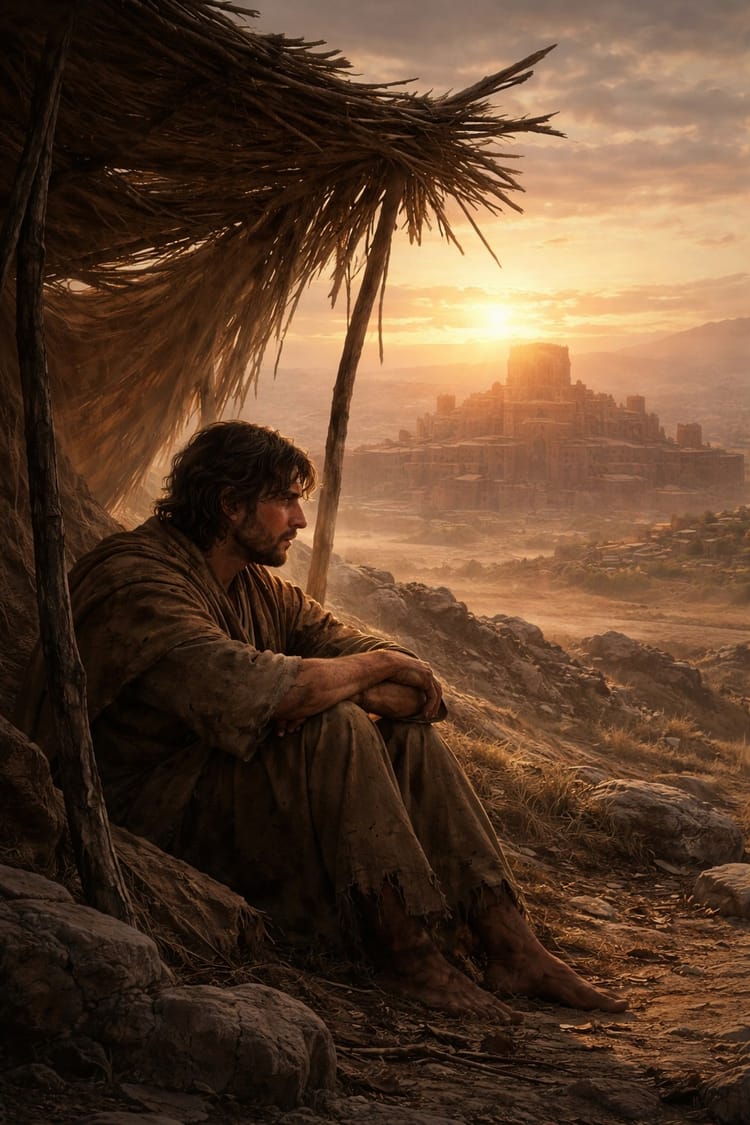
Before murdering his brother Abel, before his exile, before the God placed the mark upon him, and before the long road east of Eden, there was a single offering.
It was a simple act, perhaps even a familiar ritual. It wasn’t dramatic, and nothing nearly considered violent. Watching from afar it was merely two brothers placing gifts before God.
But the story in Genesis only tells us what they offered. The fracture hides in the why they offered.
Most readers rush past this moment, treating Cain’s rejected gift as a footnote on the way to a more explosive story of jealousy and murder.
But the offering itself is the story. To understand why Cain fell, you must understand what he bowed to before he ever considered laying a hand on Abel.
The Gift That Wasn’t a Gift
The text tells us two things, and the order matters:
Abel brought the firstborn.
Cain brought some of the fruits of the soil.
Abel chose the first, and Cain, chose… something.
Abel gave from surrender.
Cain gave from surplus.
One offered devotion while the other offered productivity. Abel’s altar was an act of faith; Cain’s an act of pride. It wasn’t the loud, chest-thumping pride that one witnesses in professional sports or achieving a high award, but the quiet kind requesting God to validate the work of one’s own hands.
Cain wasn’t worshiping God; Cain was worshipping Cain. He laid his crops before Heaven as a craftsman lays a masterpiece before a judge, audience, or boss, hoping for applause. His sacrifice was more of a résumé than a surrender. And God does not bless self-worship even when it comes dressed as devotion.
This is manifested further when God speaks through his prophet Micah telling Israel, “… you shall no longer bow down to the work of your hands.” Micah 5:13 Although the specific instance isn’t situationally the same, the meaning and application is.
Rejection Was Mercy, Not Humiliation
Cain’s face falls when God refuses his offering, but the refusal isn’t petty or arbitrary. It’s protective. Had God accepted Cain’s sacrifice, He would have affirmed a lie…
· that what we create is worthy of our worship.
· that identity is measured by productivity.
· that devotion is earned, not given.
Cain’s altar said, “look what I made, admire my work”. God answered, I will not let you bow to it. Rejection was the boundary Cain didn’t know he needed until it exposed a fissure in his identity.
Pride Is the Parent of Violence
Ultimately Cain wasn’t angry at Abel; he was angry at exposure. Abel’s offering revealed what Cain’s lacked, faith, surrender and humility.
Cain didn’t kill his brother out of a sudden rage; he killed him because Abel’s righteousness revealed Cain’s self-worship. Pride always demands a scapegoat.
When Abel’s offering stood upright, Cain’s identity collapsed. Sin was crouching at the door, and Cain opened it himself.
The murder wasn’t the beginning of Cain’s demise; it was the conclusion of a fall that began at an altar built for the wrong god.
The Mark Revisited; Mercy Over the Ruins of Pride
Where the first Cain article (East of Eden) explored God's mark as mercy, protecting a restless man from becoming prey to the violence he unleashed. This one expands the mark to add a second dimension. It’s a permanent counter spell against Cain’s original idolatry.
Cain worshiped the work of his hands. God gave him a mark that came from no work of his own. Where he established an identity from what he created, God gave him an identity that came purely from grace.
The mark is mercy, yes, but it is also the dismantling of the self-made altar in his heart.
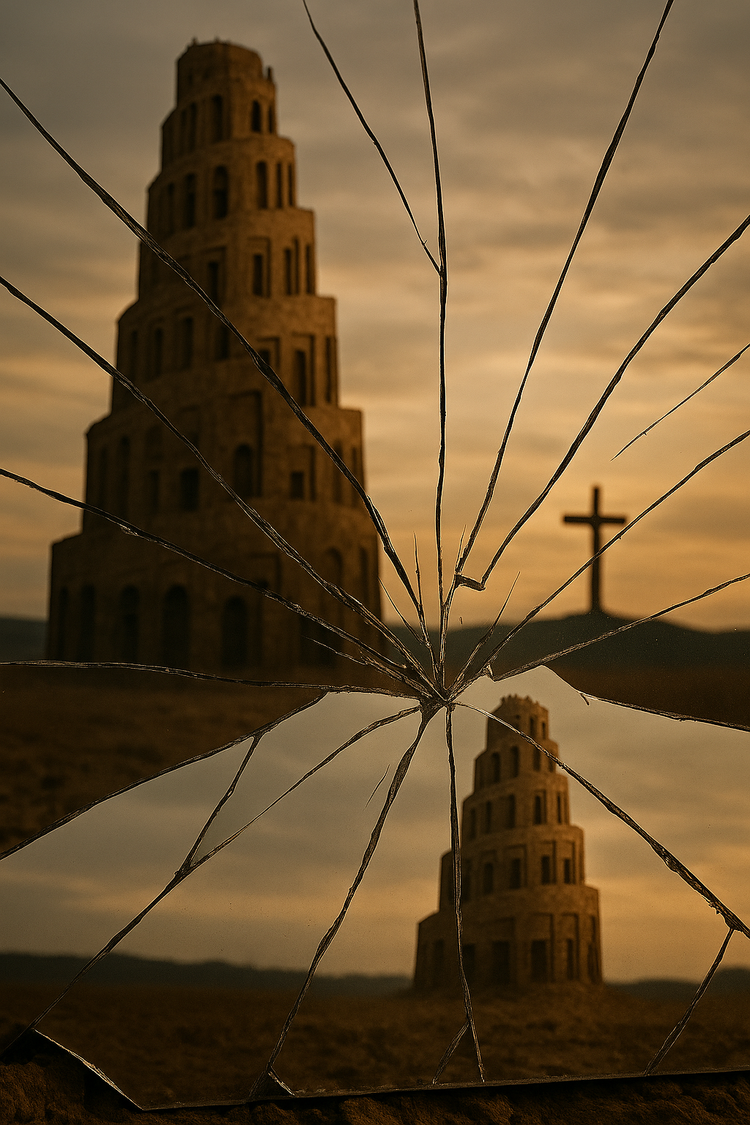
The Mirror Turned Toward Us
The way of Cain isn’t brutality, that comes later. It began much earlier when a person begins to trust what they can produce more than the One who produced them.
It begins when the altar becomes a mirror, when the gift becomes a résumé, when worship becomes performance and identity becomes achievement.
Cain’s fall is not ancient history, it’s a modern autobiography.
We still bow to careers, accomplishments, craft, status, skill to the gardens we plant and the worlds we build. Our lives are consumed with admiring and showcasing our accomplishments and achievements. The work of our hands still owns us. Cain is not a villain, rather he is a warning of how easy it is to slip into worshipping the creature rather than the creator, (Romans 1:25)
Pride doesn’t shout from the rooftops it whispers from the shadows. And the whisper always sounds like devotion until the moment it blinds us.
The Final Warning — When Devotion Performs Itself
Centuries after Cain, Jesus looked at the same fracture within humanity and gave it a voice with an astounding meaning:
“Not everyone who says to Me, ‘Lord, Lord,’ will enter the kingdom of heaven, but only the one who does the will of My Father. Many people will say, “Did we not prophesy in Your name, and in Your name perform many works?” And He will answer, “I never knew you.” Matthew 7:21-23
The echo is unmistakable. Cain offered his work just as these offered theirs. Both mistook activity for intimacy and believed devotion could be proven by productivity. And both discovered that Heaven does not grade the work of our hands, it knows our hearts.
East of the Altar
Ultimately story of Cain is not about a man who brother whose legacy is based upon the murder of his younger brother. It’s about a man who mistook himself for the offering. And this same event claws forward to us every time we measure our worth by what we make, build, or perform. We bear witness to the fracture and continue the trek one more step east of Eden.
But... mercy still stands, and the mark remains. Grace still speaks over the fields we work:
You are not the work of your hands.
You are Mine.