East of Mercy (Pt. 1 of 3)
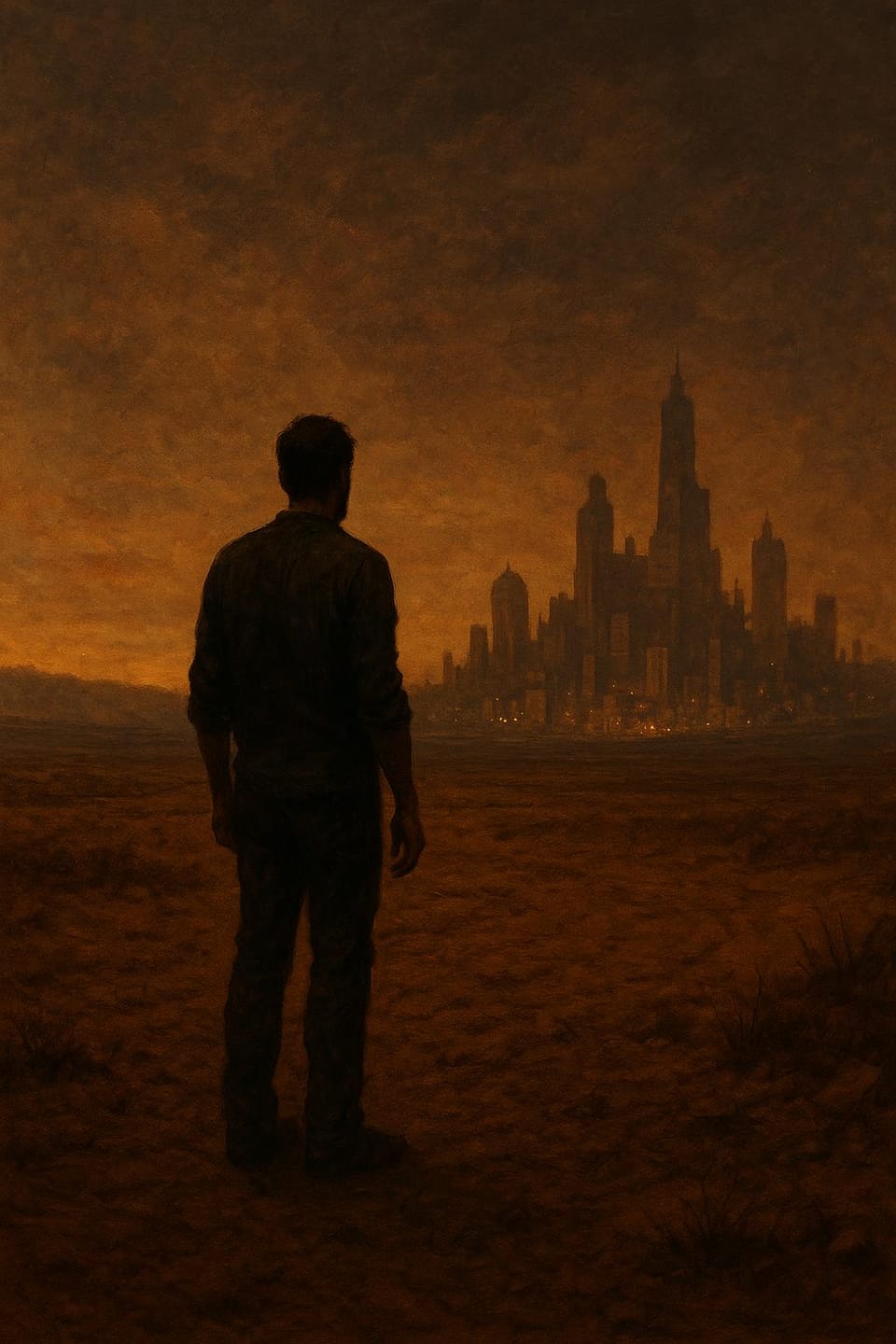
Cains mark; our mirror
Cain is remembered as the world’s first murderer, forever defined by blood in a field and the mark that followed him. But what if that mark wasn’t intended for only the preservation of his life from others but also subtly served symbolically as the memory of his act. What if duality was the intent all along?
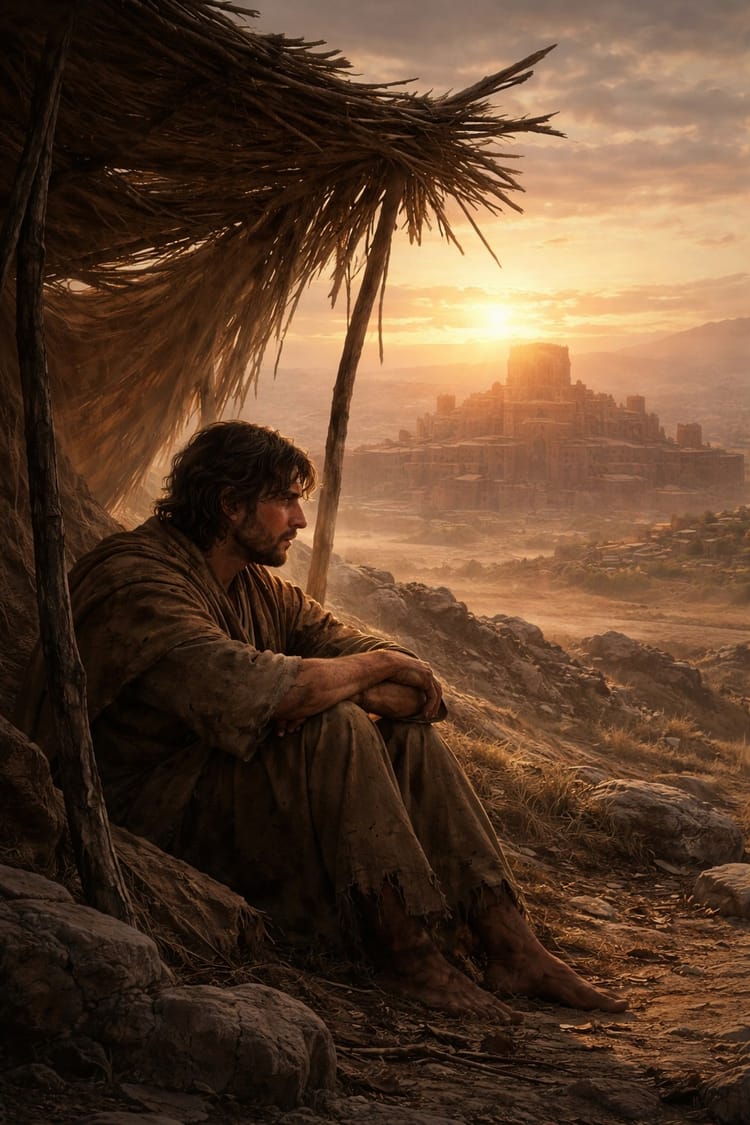
Beneath the surface of Genesis lies another story, one we rarely let ourselves hear: the tale of a man stripped of his only craft, driven from the soil that had once been his anchor. A man who built anyway. A man whose descendants carried music, metal, and innovation into the world.
Cain’s life is more than a cautionary tale, it’s a mirror. It tells us what happens when brilliance is unanchored, but also what becomes possible when failure doesn’t end the story. His mark is our reminder that even in exile, even in shame, even when the ground closes its yield to us, there is still another way forward.
The Loss of Anchor
Cain’s whole life was tied to the ground. He was a man of soil and sweat, bending over a cursed earth due to the actions of his parents, (Genesis 3:17), coaxing produce out of dust with the strength of his own hands. Farming wasn’t just survival; it was the one thing he could claim as his own.
And then came the second curse.
“When you work the ground, it shall no longer yield to you its strength.” (Genesis 4:12)
God didn’t just punish Cain with exile; He took away the only skill Cain had. The soil that had once grudgingly submitted to him, now turned silent, barren, and unresponsive. Imagine it: the one thing that gave you worth, stripped away forever.
This is more than consequence, it’s dislocation. Cain is left without an anchor, without a craft, without a way to measure his place in the world. And in that empty space, anger turns into restlessness. Restlessness turns into building. And building, for Cain, becomes both curse and calling. He went east of Eden, not just away from God, but toward a distant horizon where restless builders would someday raise cities of their own.
The Mark That Preserves
When Cain cried out, “My punishment is greater than I can bear,” God’s reply was not annihilation but preservation.
“Not so! If anyone kills Cain, vengeance shall be taken on him sevenfold. And the Lord put a mark on Cain…” (Genesis 4:15)
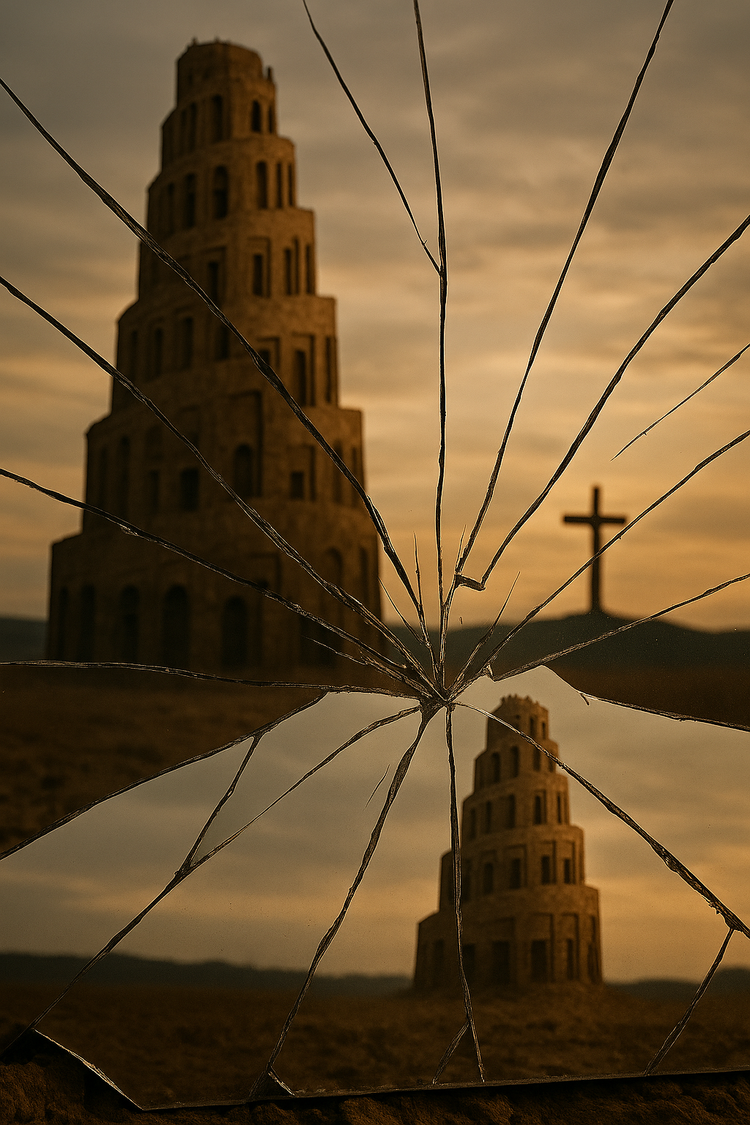
The mark was paradox. On one side, a scar, a visible reminder that Cain’s sin was undeniable, that his story would forever carry blood in its margins. But on the other, it was protection. Cain would not be destroyed. He would live on and endure.
The mark was both shame and shield, judgment and mercy, condemnation and preservation. A scar that whispered: You cannot go back, but you will not be erased.
Brilliance Without Anchor
Exiled from soil, Cain turned restless energy into something new. He built a city (Genesis 4:17). His descendants pioneered livestock breeding, musical instruments, and metallurgy (Genesis 4:20–22). From his lineage came culture, craft, and the beginnings of civilization.
The furtherance of humanity needed Cain’s restless spark. Without it, we might still be shepherds and farmers alone. His curse became catalyst. His mark became the impetus of technological momentum.
But here is the fracture: brilliance without anchor breed’s ruin. Cain’s descendants were brilliant, but also violent. Lamech, his great-great-great-grandson, bragged of murder more brutal than Cain’s own (Genesis 4:23–24).
The spark that could build cities could also burn them down.
Cain’s story tells us that innovation untethered from godliness becomes idolatry. Creativity divorced from humility becomes violence, and progress without an anchor breeds collapse.
The Personal Mirror
The “way of Cain,” as Jude 1:11 later calls it, is not just murder. It is radical self-reliance; the refusal to be tethered, and a choice to carry one’s mark as fuel rather than as surrender.
And yet, Cain’s story still whispers hope:
• You can press on after collapse.
• The thing you lost may force you into something new.
• The mark you carry, the thing others see as shame, may be the very scar that pushes you toward building, adaptation, even brilliance. Perhaps even insolence can produce vessels of mercy, though they may never see it in their own lifetime.
Cain is not only a warning of ruin. He is a reminder of resilience.
Hope in the Mark
Cain’s story does not excuse sin, nor does it erase the spilled blood of Abel. But what it does is refract that ancient tragedy into something deeper: a tale of what it means to live marked, restless, yet still creating and moving forward.
You may not have committed an act of Cains brutality, but your failures and sins still leave scars, and your choices may close doors forever. Similarly, others in your circle of family and friends may struggle to forget your past as it leaves marks and signs they never let you forget. Yet east of Eden, the ground still trembles with possibility. The mark that others see as condemnation may, in the hands of God, become a preservation, a sign that mercy awaits further east. Every generation continues to rebuild what Cain began, one heartbeat, one step at a time. The fracture he opened remains, but grace keeps asking if we’ll let it heal through us.