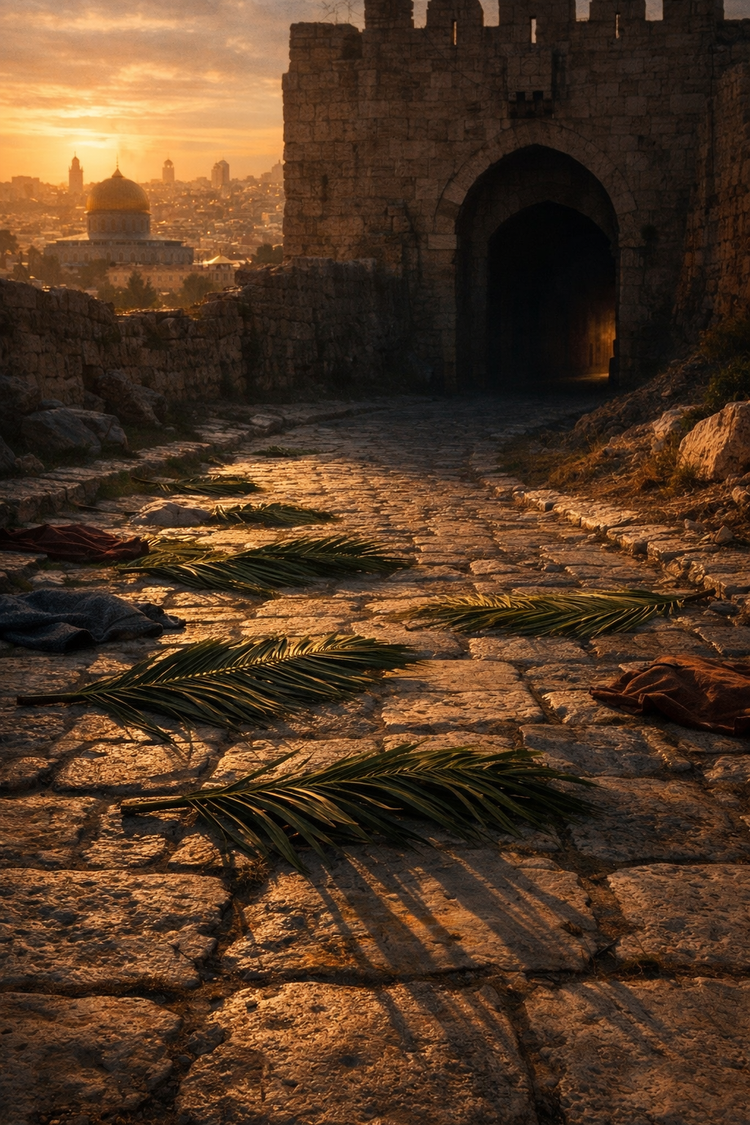
Jonah: A Different Beginning
Reframing a familiar prophet through a different lens
Most of us met Jonah as the stubborn prophet who ran from his assignment. A man with experience who should have known better but simply didn’t want God to forgive the wrong people.
But the story begins to breathe differently if we imagine something else, something quieter, simpler, and far more human: What if Nineveh was Jonah’s first prophetic calling? What if instead of being a hardened man, he was untested? What if he wasn’t rebellious, he was naturally overwhelmed?
This single change in perspective rearranges the emotional structure of the book. The narrative stops looking like disobedience and starts looking like formation. And Jonah becomes someone we recognize.
The Young Prophet Who Breaks Under the Weight of His Calling
A new prophet, hearing God clearly for the first time, would feel the stress of the assignment differently. Nineveh wasn’t just a wicked city; it was the capital of a violent empire known for crushing nations. A young messenger sent into that world would not feel heroic, he would feel exposed. Jonah’s flight to Tarshish begins to make sense, not as defiance, but as collapse... the first reaction of a man whose calling felt too large for his chest.
Sometimes the first thing God asks of us is the thing we’re least prepared to do.
The Storm That Forms, Not Punishes
When Jonah tries to vanish across the sea, he enters a storm that refuses to let him go (Jonah 1:4). The sailors cast lots, Jonah confesses, and the sea stills the moment he hits the water.
This scene is usually read as judgment. But under this new lens, something else comes forward: Jonah isn’t being destroyed. He’s being formed. The storm exposes his fear while the sea confronts his limits. And the fish returns him to the surface as a different man than the one who sank beneath the waves.
The fish didn’t swallow a hardened prophet refusing to do his job, it swallowed a frightened one and returned someone who had met God’s mercy in the dark.
The Reputation That Reaches Nineveh Before Jonah
Jonah’s survival from such an event would not have remained a secret. The Gentile sailors who witnessed the miracle “feared the Lord exceedingly” and made vows due to the experience. (Jonah 1:16). The sailors carried news everywhere they went and their story was unbelievable:
- “The storm stopped the moment we threw him in. He should have died... He didn’t…”
By the time Jonah walks into Nineveh, pale from the acidic environment inside the fish, and exhausted from the ordeal, he is not an unknown figure. He is the man who went under and came back. This is why the entire city, from king to cattle, responds immediately (Jonah 3:5–7). They aren’t listening to a sermon; they’re listening to a sign.
Jesus confirms this later: “Jonah became a sign to the people of Nineveh…” (Luke 11:30)
It wasn’t as much the words being said, it was the man delivering it. Transported from death to the sands of their beach now standing amongst them, alive, sharing with them news of their own fates unless…
East of the City — Where God Finishes the Prophet
This is the scene that always felt strange:
- The booth.
- The plant.
- The worm.
- The wind.
- Small pieces.
- Unusual pacing.
A major prophetic figure melting down over shade? But when Jonah is seen as young, bruised, and newly formed, the moment east of the city becomes the place God completes the work He started in the sea.
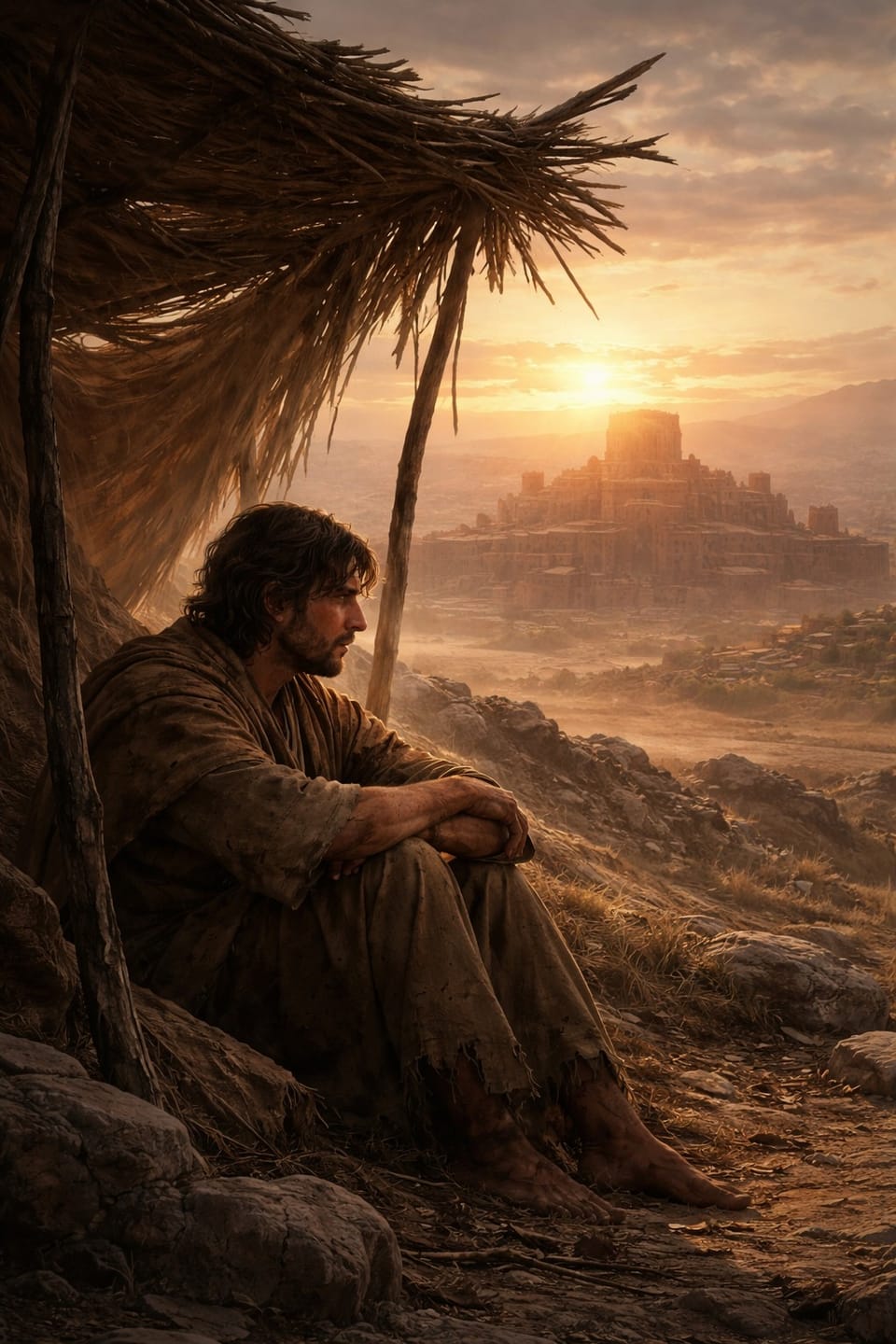
The Booth ~ Jonah Builds a Safe God
Jonah constructs a shelter (Jonah 4:5). Not just for shade, but for control. It is the same impulse seen in Eden when a human attempts to hide from the full weight of God’s presence.
The booth he builds is small, but it is intentional nevertheless. It places him near the city without placing him inside the outcome. From it, Jonah can watch what he believes must happen while remaining untouched by what actually does. The structure allows him to observe God’s justice without risking God’s mercy. It does not block the sun so much as it narrows the field of view. The booth is not built for comfort alone; it’s built for containment.
Jonah’s booth is a theology he can sit inside. A version of God who fits his expectations.
The Plant ~ Comfort Misread as Confirmation
God appoints a plant that grows over Jonah (Jonah 4:6). The text says he was “exceedingly glad.” This is the first gentle moment Jonah receives after a terrifying journey, and he misreads it. Thinking the plant means God sees things his way, he misinterprets comfort as approval, not mercy.
The Worm ~ The Illusion Removed
At dawn, God appoints a worm to destroy the plant (Jonah 4:7), not as punishment, as truth. The worm dismantles the God “image” Jonah built inside his booth. It reveals that Jonah’s theology was too small to hold the God who loves both Israel and Nineveh.
The East Wind ~ The Final Shaping
Then comes the scorching east wind (Jonah 4:8). It strips Jonah of the last illusions he has, not to shame him, but to reshape him. God’s final question to Jonah is not a rebuke; it is a recalibration:
- “Should I not have compassion…?” (Jonah 4:11)
A prophet who cannot understand mercy cannot speak for a merciful God. This moment east of the city becomes the hinge, the place where a reluctant messenger becomes a true prophet. It prepares him to become the Jonah we see later in 2 Kings 14:25, advising the king with authority and clarity.
What makes this reading more than a psychological exercise is what comes later. Jonah does not disappear into obscurity after Nineveh. In 2 Kings 14:25, he appears again, this time delivering a word of restoration to Israel that comes to pass without resistance or collapse. The contrast is striking. The prophet who once fled from mercy now speaks it with clarity. Not because Nineveh softened him, but because it formed him. The Jonah who ran is not the Jonah who returned. Something in him has been tempered, not removed.
Why Jesus Points Back to Jonah
Jesus refers to Jonah repeatedly more than any other prophet involved in a single narrative (Matthew 12:41, Luke 11:32). He does not highlight Jonah’s message. He highlights Jonah’s transformation.
Jonah:
- descends
- is swallowed
- is entombed
- returns
- becomes a sign to Gentiles
Jesus completes the pattern Jonah only sketches. Jonah didn’t mirror Christ perfectly, but he carried the earliest shape of resurrection.
Jesus would later say that no sign would be given except the sign of Jonah, not because Jonah was exemplary, but because he was formative. Jonah did not prefigure perfection, rather he prefigured passage. He went down into darkness, emerged altered, and carried a warning that was both judgment and mercy.
The Final Turn
When you read Jonah as a young prophet, not a seasoned veteran, the story sheds its traditional caricature and regains its humanity. The storm and the repentance of both Jonah and an entire city make sense. The meltdown east of the city makes sense. And Jesus’ comparison becomes beautifully logical. Jonah stops being a runaway and becomes someone God refused to abandon. His story is not about failure, it’s about formation. A prophet being unmade so he can finally become the kind of man who can walk into the places he fears and tell the truth about a God whose mercy refuses borders.
Jonah’s story does not end with repentance or rebellion, but with exposure. The booth is gone, the vantage point is gone. What remains is a man who knows God’s character intimately and is still unsure whether he wants to resemble it. The text leaves us there, not because Jonah’s story is unfinished, but because that position is uncomfortably familiar.