The Blood That Spoke First (Pt. 3 of 3)
The First Altar
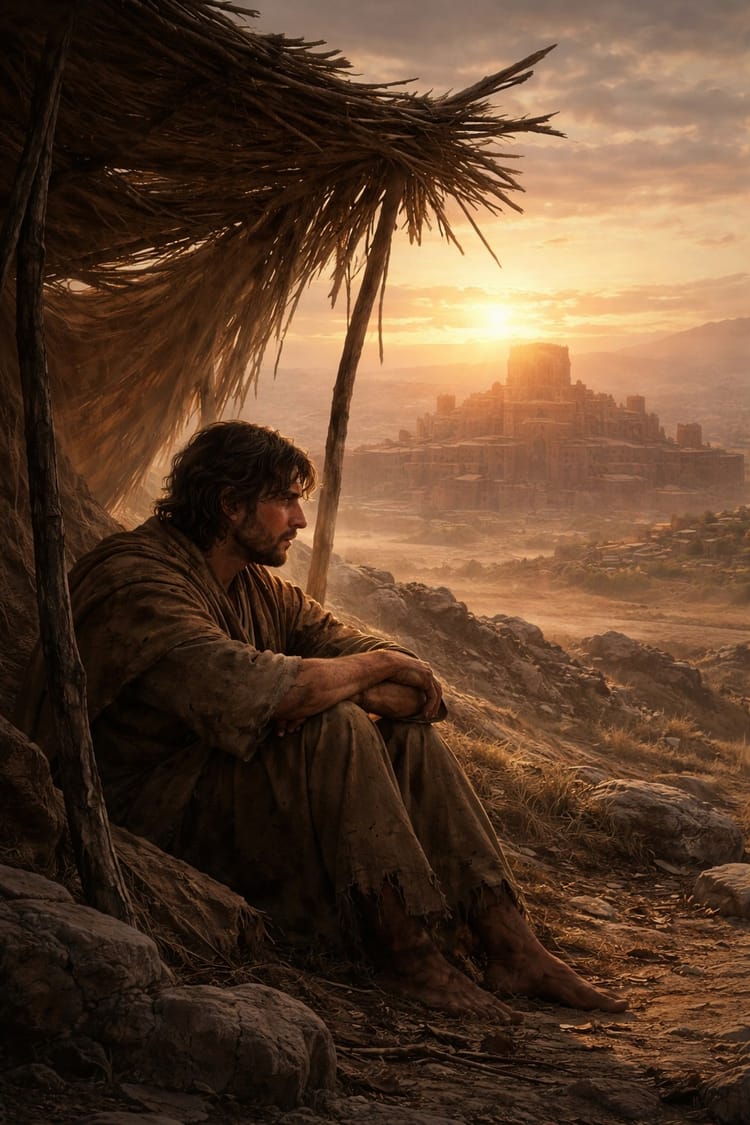
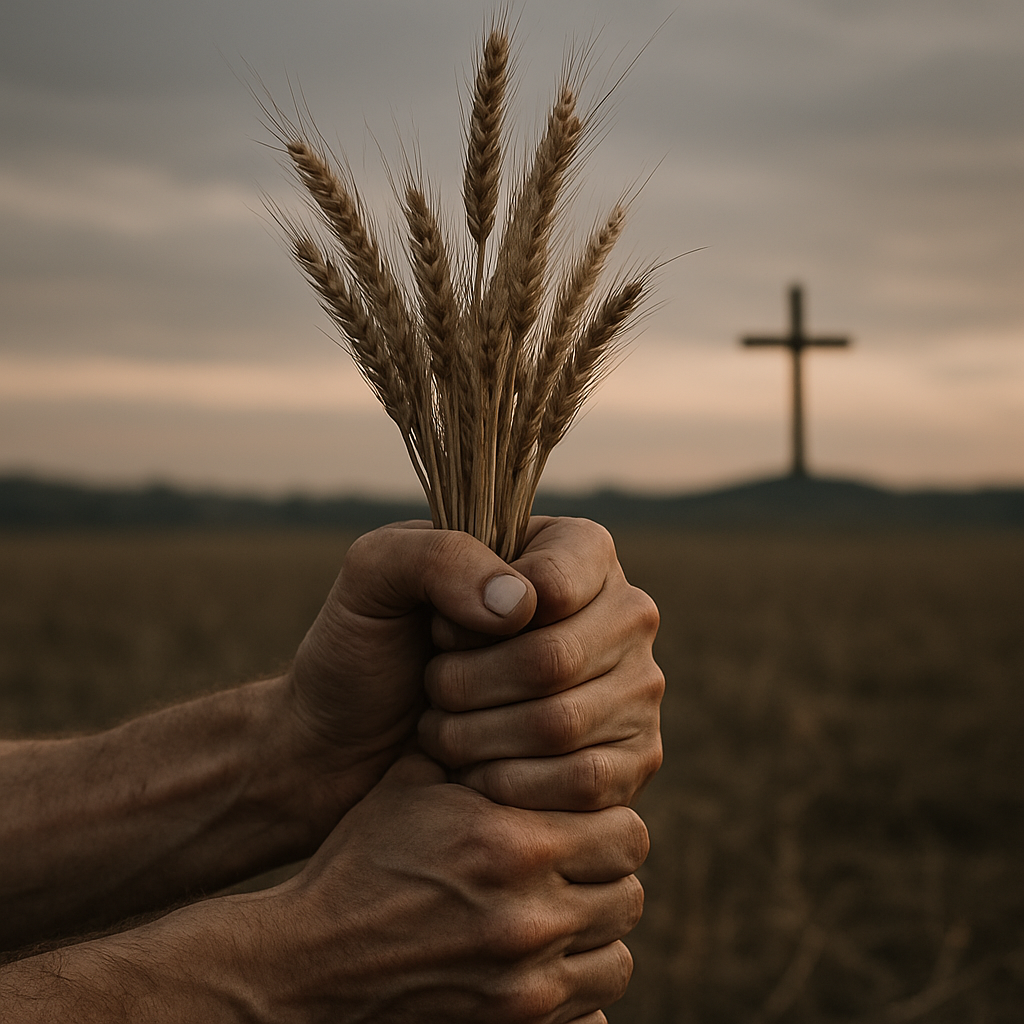
Before the temple, the priesthood, or the commandments were written in stone, there was a field. Across the field walked two brothers, with two offerings, and two very differing ways of seeing God.
Abel brought a lamb. It wasn’t the work of his hands, but a life that breathed on its own. Cain brought the yield of the soil, fruits of his effort, the proof of his labor.
Abel’s altar was surrender and offered back what God had already made; Cain’s altar, self-expression, what he had shaped from the ground that God had cursed.
In that first exchange between earth and heaven, something eternal flickered: the idea that only innocence can bridge what guilt has broken. The blood of Abel’s lamb became the first prophetic act of worship, the foreshadow of a Lamb yet to come, whose own altar would not be built of stones but of flesh and wood. This is where the Gospel begins, not in Bethlehem, but in a field east of Eden, where worship first learned to bleed.
Abel’s offering wasn’t just blood; it was abundance. He brought the firstborn and their fat portions, the richest part, the sign of joy. Long before the Law declared that the fat belonged to God alone, Abel was already living that truth. He didn’t offer to earn favor; he offered from delight. In essence, Abel offered life and delight, while Cain offered effort and proof. One said, 'Here’s my best.' The other said, 'Here’s what I did.'
The Strange Choice of a Lamb
To the Israelites wandering through the wilderness who first heard Moses’ words, the choice of a lamb would have seemed strange. In Egypt, rams and lambs weren’t ordinary livestock, they were symbols of fertility and divine power. Amun, Khnum, and other major gods were depicted with ram’s horns, giving sheep an aura of sacred potency. Herodotus later recorded that animals tied to Egyptian gods were often avoided as food, especially among the priestly class. Even Moses admitted that Israel’s sacrifices would be “detestable to the Egyptians” (Exodus 8:26).
So, the Passover lamb became
a deliberate inversion: the Egyptians worshiped what they would not eat, feared
what they sacrificed, and measured devotion by cost. God asked Israel to
slaughter what Egypt called sacred, and in doing so exposed the fragility of a
power built on symbols that could bleed.
But Moses retold the story differently. In his version, the lamb was no idol of strength but a symbol of surrender. The God of Israel took what Egypt called powerful and made it meek; He took what Pharaoh’s priests offered to maintain favor and made it the emblem of grace.
The lamb in Abel’s hands was a quiet rebellion long before empires rose, an early whisper that power was never the point.
The Pattern of Substitution
Abel’s lamb became the seed of a pattern that stretched across centuries. Its blood wrote the first sentence of a story the prophets would spend millennia finishing.
From that field east of Eden, the pattern wound its way through history, to a doorway in Egypt brushed with lamb’s blood, to an altar in the wilderness heavy with smoke and song, to a temple in Jerusalem where the high priest trembled once a year before the mercy seat.
Each sacrifice was a rehearsal and each drop of blood, a footnote to the same sentence: innocence offered for the guilty.
The Lamb the Poor Couldn’t Afford
Centuries later, a young couple from Nazareth brought their newborn to the temple. They could not afford a lamb, so they offered two doves, a known substitute for the poor. And in doing so, they fulfilled the oldest irony of faith: the Lamb of God entered the world in a family too poor to offer one.
From Abel’s field to Bethlehem’s stable to Golgotha’s hill, the story keeps the same shape, a God who asks not for wealth or perfection, but for a heart willing to give the best it has, and to trust that what it cannot give, He will enhance.
But patterns only hold until the fulfillment arrives and when it did, the altar moved again, not on the ground of men’s construction, but on a hill called Golgotha.
There the final Lamb took the place of all others, ending the long lineage of blood by offering His own. The echo that began in Abel’s field found its answer in Christ’s cry: 'It is finished.'
The Pattern Beyond Time
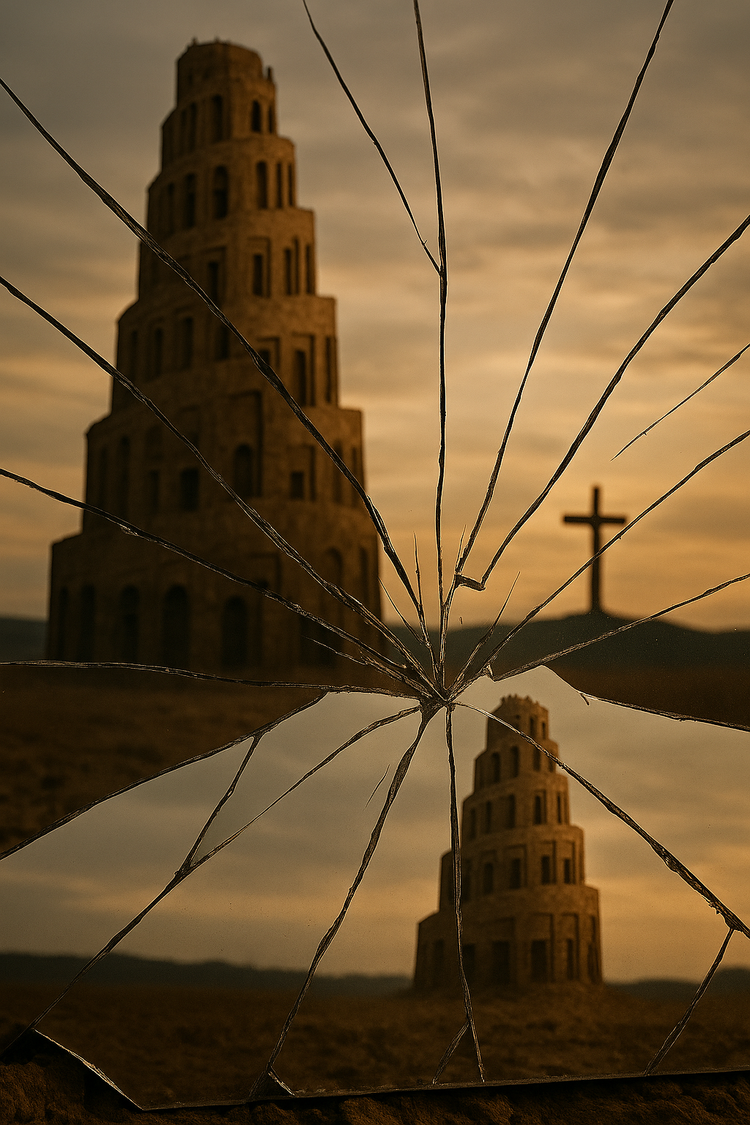
Something happens when you step back from the story, not just Cain, not just Abel, not just Jesus, but the shape of the whole thing. It stops reading like disconnected events and starts behaving visually like a modern-day jig-saw puzzle.
Abel’s lamb is the initial first piece, the first corner segment. Not the picture, but the shape of one. A firstborn life. Blood poured. A righteous one slain by a jealous brother. A cry rising from the ground for justice.
Then the pattern begins threading through time: Abraham’s son on the mountain. The Passover lamb. The blood on the doorposts. The sacrifices in the Temple. The prophets grieving a righteous sufferer.
Each is a piece that fits the same outline, similar edges, similar shadows, but never the full image. And then, five thousand years after Abel, another Firstborn steps into the story.
Another Lamb - another offering - another righteous one killed by jealous men - another cry rising from the ground; but this time, not for vengeance, but for mercy. And suddenly the pieces stop multiplying because the picture is complete.
Patterns only hold until fulfillment arrives. Shadows only stretch until the light stands in front of them. That’s the strange brilliance of it all: the story behaves as if the ending was known from the beginning. As if time itself bends around a single event and all earlier moments arrange themselves to echo it. A thousand years to Him are not delay, but detail; each sacrifice, a brushstroke in a mural only eternity can view whole; and it leaves you with a quiet, unsettling question: what kind of story does this, unless Someone outside of time was guiding the pieces into place? Here’s the fracture: In the first story, a son offers a lamb to God. In the last story, God offers His Son as a lamb for us.
One cry demanded justice. The other cry gave mercy.
You don’t have to force a conclusion nor accept anything blindly. Just look at the puzzle, take it apart, then put it together again. Look at the shape of the pieces. Look at how far apart they were written… and how perfectly they fit.
It’s enough to make anyone whisper, almost against their will:
“I’ve never seen it like that before.”
The skeptic calls it coincidence. The prophet calls it memory. The believer simply calls it grace. Because when the pattern survives empires, languages, and centuries of forgetting, when the same melody of blood and mercy resurfaces after five thousand years unchanged, you begin to realize: perhaps Scripture isn’t explaining humanity to God, but God to humanity.
Reflection
We usually read Cain and Abel like moral opposites, one right, one wrong, one accepted, one rejected. But when the story becomes a pattern instead of an episode, something shifts.
Cain builds an altar out of effort. Abel builds one out of trust. Two brothers reaching for the same God, but in different languages.
And the truth is, we do the same. We hold out what we’ve accomplished, or we hold out what we love. We offer our strength, or we offer our surrender. Two altars, still standing yet today.
But the long pattern suggests something deeper: every altar we build is really a search for the missing piece of the puzzle, the One who completes it. If Abel’s lamb was the first piece, and Christ was the last, then the only unanswered part of the picture is the place where your life fits between them.
Not as a sacrifice - not as a priest - but as a witness standing between justice and mercy, effort and grace, Cain and Christ. Once you see the pattern spread across five thousand years, from a field to a cross, you’re left with a simple, unsettling truth: the puzzle is complete minus one piece, which is you.
The only open space is you.
The story doesn’t demand an answer; it simply opens the fracture into a quiet space between justice and mercy, effort and surrender, leaving the ground still listening for blood that speaks a better word and leaves the one last piece of the puzzle unresolved, which is how do I fit in