The Footnote That Split the World
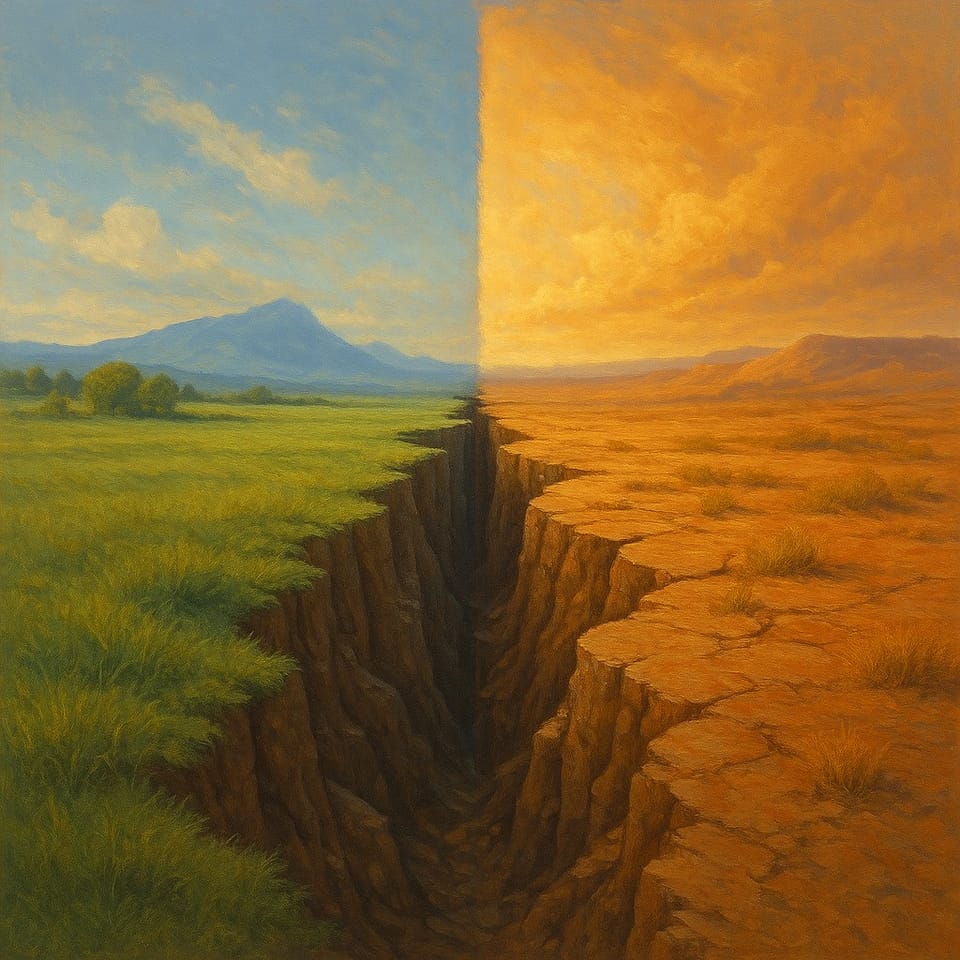
In the quiet genealogy of Genesis, a single name, in a single verse, trembles like a fault line; Peleg, for “in his days the earth was divided; Genesis 10:25.” A line so momentary it’s easy to miss, tucked between names that blur into ancient echoes. But sometimes, it’s the smallest mention that splits the earth open.
Peleg’s story isn’t told with grand gestures or divine storms. There is no ark, no mountain, no miracles, flames or walls of water. There is only a name, a record, and an echo of division. Yet Moses specifically chose to include him within an ancestral account. He could have simply moved on to Joktan’s descendants, the builders and wanderers, but instead he paused, an “oh, by the way” that changes everything.
Maybe that’s the point. Some fractures aren’t meant to end things; they’re meant to reveal them.
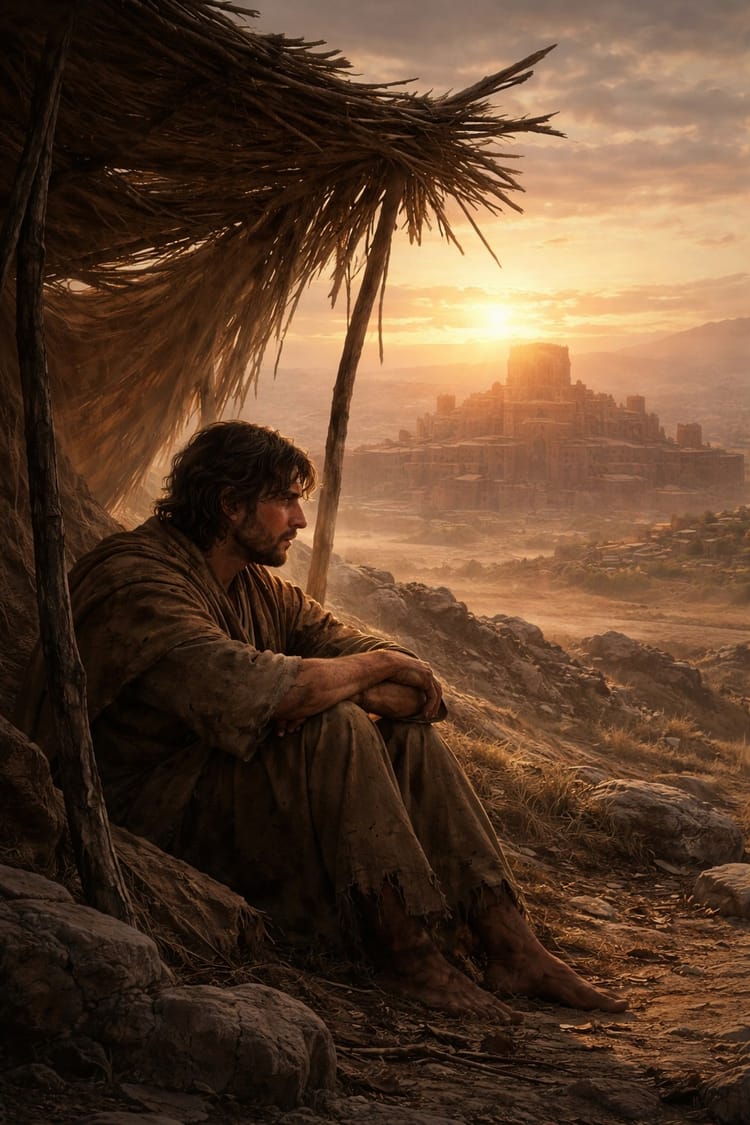
When Moses wrote Genesis, he wasn’t penning history from a distance. He was guiding a people who had known the ache of division firsthand, freed from Egypt, wandering toward a promise, splintered in spirit, and very uncertain of their place on earth. Division was their story. So, when he wrote of Peleg, he wasn’t describing physical fault lines of geography but rather of identity.
It was a whisper to the weary: You are not the first to live through division. Even this situation has a name.
Peleg’s world was one of scattering, languages were fragmenting, families separating while their natural homeland started shifting beneath their feet. Everything familiar to them became strange. Yet buried inside this division wasn’t a curse, it was a design. For without scattering, there is no spreading; without separation, no shaping; without disruption, no direction.
We don’t know much about Peleg himself, only that he lived, loved, fathered, and died. But maybe his significance isn’t in what he did, but in what his name means. It’s as if God etched a reminder into his mention: that even division has purpose, that even cracks can carry light.
The earth divided in his days, but humanity continued. It adapted and built; yet always remembered.
Maybe Moses saw in that pattern a reflection of his own people, caught in a never-ending wilderness between a known Egypt and a promised Canaan, divided from the past yet not at rest in the future. Like Peleg’s generation, they too were living in the between. Perhaps Moses wanted them to know that the "between" is not the end of the story. It’s where God’s design begins to take shape.
It’s comforting to think the same might be true now. Living in our divisions of nations, of hearts, of families and even ourselves, can feel final, but it may be the scaffolding of a greater restoration yet to manifest itself. The fracture is painful, but it also defines new boundaries where beauty can take root.
Peleg’s brother was Joktan, whose name means “he will be made small.” Together their names tell a subtle story: that division humbles, but humility makes room for creation. A world narrows before it widens, breaking comes before the blooms.
Maybe that’s why Moses included him... to map a human name to easily remind future generations that every fault line carries both loss and possibility. When the world splits beneath your feet, it’s easy to fall into despair. But sometimes, the split is the only way for something buried to come to light.
In every generation, possibly within an individual single lifetime, the earth divides again. Empires fall, ideas fracture, hearts break, and plans fail. But through it all, God keeps writing names, maybe your own, small reminders that division is not the end of His design.
Like Peleg, your name is being written not in spite of the fracture, but because of it, and growth is just a moment away.